Houston, We Have a Pale Ale... an APA Recipe


Since I am exploring water issues, and recently purchased several pounds of high-alpha American and New Zealand hops... I thought I would calibrate on a hoppy Pale Ale. The title really references hops varieties that make me think of space and NASA, as well as the problems I have been having with my water profile and efficiency.
While I am fairly carefree when brewing, estimates abounding - I was extremely careful about measuring water amounts, pH at various stages, minor salt additions, etc. I also performed a modified hop stand (we can get into how I do that in a later post) where I pulled the temp down to 80-ish over 30 minutes in the kettle. Since I brewed a few days ago - this is still in the fermenter at 68F, and will be through the next couple of weeks. Will also dry hop this batch.
Recipe:
Bastrop West Coast Pale Ale (11 Gallon Batch)
Brewer's Note: This is a 10-gallon batch (split into two fermenters) of a West Coast styled Pale Ale. It features a complex malt backbone of Crystal 120L and Biscuit malt, balanced by a heavy whirlpool of dank, piney hops (Summit, Apollo, Columbus).
Vital Stats
| Stat | Value |
|---|---|
| Batch Size | 11.00 Gal |
| Boil Time | 60 Min |
| Est. OG | 1.053 (13.2 Plato) |
| IBU | ~36 |
| Color | 10.0 SRM (Deep Amber/Copper) |
| Efficiency | 65% |
The Grain Bill
- 22 lbs 8 oz — Brewers 2-Row Malt (90.9%)
- 1 lb — Crystal 120L (4%)
- 12 oz — Biscuit Malt (3%)
- 8 oz — Acid Malt (2%) (pH Adjustment)
Water Chemistry
- Base Water: The Colony, Bastrop Texas (Aqua Water)
- Mash Additions:
- 2.00 tsp Calcium Chloride
- 1.00 tsp Gypsum (Calcium Sulfate)
The Hop Schedule
- Boil (60 min): 0.50 oz Summit [17.0%] (14.5 IBU)
- Boil (45 min): 0.75 oz Apollo [18.0%] (21.2 IBU)
- Whirlpool / Steep (30 min):
- 1.00 oz Bravo
- 1.00 oz Columbus (Tomahawk)
- 1.00 oz Summit
- Dry Hop (7 Days): 2.00 oz Apollo [18.0%]
Yeast & Additions
- Yeast: 1 pkg Lallemand BRY-97 (American West Coast Yeast)
- Fining: Whirlfloc Tablet (15 min)
Brewing Instructions
1. The Mash (Medium Body)
- Mash In: Add 7.8 gallons (31.3 qt) of water at 167.3°F. Target a mash temperature of 152.0°F.
- Rest: Hold at 152°F for 60 minutes.
- Mash Out: Add 4.3 gallons (17.3 qt) of water at 202.8°F to raise grain bed to 168.0°F. Hold for 10 min.
- Sparge: Batch sparge with 3.00 gallons of water at 168.0°F.
2. The Boil (60 Minutes)
- 60 Minutes: Bring to a boil and add the Summit hops.
- 45 Minutes: Add the Apollo hops.
- 15 Minutes: Add the Whirlfloc tablet.
- Flameout/Whirlpool: Turn off the heat. Add the Bravo, Columbus, and Summit hops. Let them steep for 30 minutes before chilling to extract aroma without excessive bitterness.
3. Fermentation
- Chill wort to pitch temperature.
- Oxygenate well and pitch the BRY-97 yeast.
- Dry Hop: Add the final 2.00 oz of Apollo hops for the last 7 days of fermentation.
Had many issues, despite a fairly smooth brew day. Hitting mash pH took a very long time, and required salt additions in the mash. To eliminate any variability, as I will brew this again with RO water, I preheated the mash tun with the strike water, and then added the grist during recirculation. I also batch sparged, eliminating another possible variable. I normally use a hybrid sparge method, but it's too finicky to expect the same result next time.
In about a week, I will dry hop on 2 ounces of Apollo for 7 days.
First time using BRY-97, and will repitch the yeast after washing and rebuilding to the same sized starter.
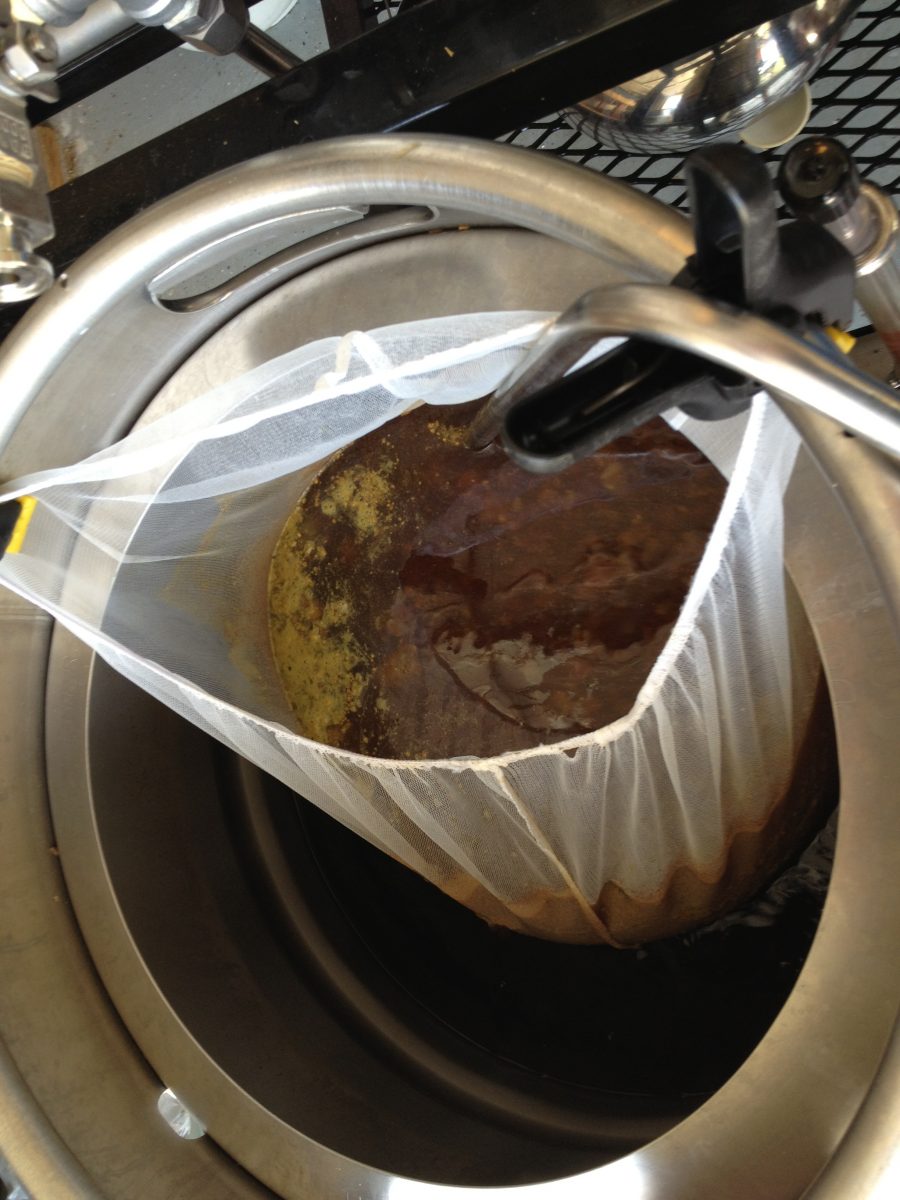
The wort came out much darker than anticipated. I used Crystal 120 because I had it sitting around. I would use Crystal 40 or 60 instead. The biscuit came through really nicely in the wort - surprisingly so.