Summer's Midnight Saison - A Black Saison Recipe


Hard to pick a first recipe for a brewing blog, but here it is - summer in all its sweltering Texas glory. So I deal with summer brewing session saisons. I have been drinking a few and reading quite a bit about the history, and seldom does the past match the present. Farmhouse ales, however, are all the rage. I had just finished a crisp 10G split batch that came out too clean, no pepper or spice from the yeast, but I managed to salvage it by putting half of the recipe onto sour cherries. Just so you know, the cherries added back in that something is missing.
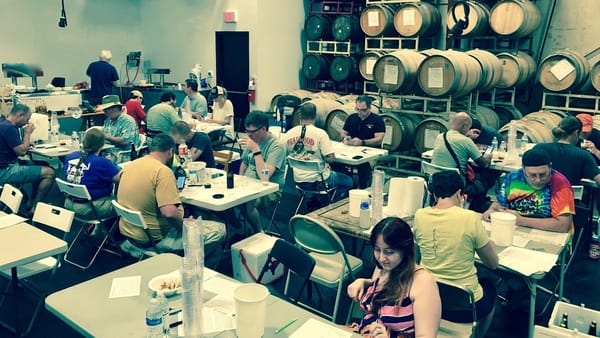
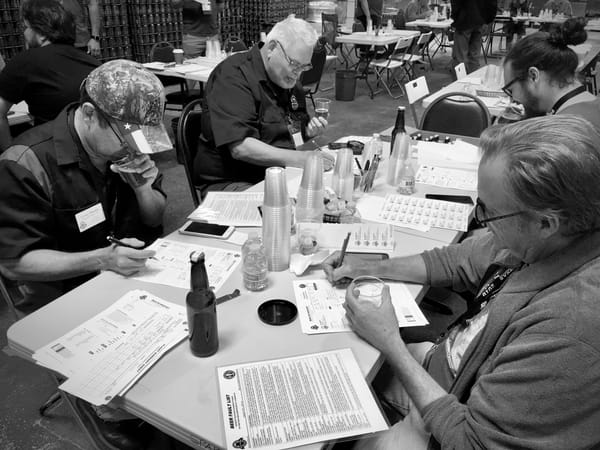
I also had just met Mark Schoppe at a recent Zealots meeting and had tasted 4 side-by-side comparisons of Saison yeasts. Mark had actually let these roll through 90+ degrees to ferment, and they came out fantastic. Fascinating. AND I had just harvested some yeast from Ommegang's Hennepin saison and had a complete 2-liter starter ready to go—time to make a saison. Too lazy to make a new "Yeast" in BeerSmith - so ignore that element in the recipe below.
I wanted something very different, and had read that much of the variability of farmhouse ales was really about fresh available ingredients, and occasionally unusual things would find their way into the grist. With some odd volumes of dark malt hanging around, I decided to go dark—had some D-180 candy sugar sitting around as well, but kept the OG low—not even came near a BSG—session, not aged. There have been many examples of dark or black saison. I took the same basic grist from my normal saison and swapped out only a few things. I added in a touch of Crystal 120, some red wheat (head retention), and finally some de-bittered black malt. Too much black malt, I should admit - was hoping for something less inky at the end. I took a portion of my honey and subbed out the 1# of D-180. Added the honey during primary fermentation and dry-hopped with a little Apollo (thought it helped the citrus element stand out).
Dark Winter Saison (10 Gallon Batch)
Brewer's Note: This is a session-strength dark Saison featuring complex spice notes from orange peel and zest, dried out with candi sugar and honey for a light body.
Vital Stats
| Stat | Value |
|---|---|
| Batch Size | 10.00 Gal |
| Boil Time | 60 Min |
| Est. OG | 1.046 |
| IBU | ~35 |
| Color | 25.4 SRM (Dark Brown/Black) |
| Efficiency | 72% |
The Grain Bill
- 12 lbs — Pilsner (2 Row) Bel (71%)
- 1 lb — Caramel Malt 120L (5.9%)
- 1 lb — Red Wheat (5.9%)
- 8 oz — Aromatic Malt (3%)
- 6.4 oz — Debittered Black Malt (2.4%)
The Sugars
- 1 lb — Dark Candi Sugar (Added with 5 min left in boil)
- 1 lb — Honey (Added during fermentation or late boil)
The Hops & Spices
- First Wort (60 min): 1.00 oz Bravo [15.5%] (32 IBU)
- Boil: 1.00 oz Hallertauer Hersbrucker [4.0%] (3 IBU)
- 15 Min: 2.00 oz Orange Zest (Fresh)
- 5 Min: 1.00 oz Bitter Orange Peel
- Whirlpool/Steep (15 min): 2.00 oz Saaz [4.0%]
- Dry Hop (3 Days): 1.00 oz Apollo [18.0%]
Yeast & Additions
- Yeast: 3 pkgs Belgian Style Saison Ale Yeast Blend (White Labs)
- Fining: Whirlfloc Tablet (15 min)
- Other: Yeast Nutrient (10 min)
Brewing Instructions
1. The Mash (Light Body Profile)
- Mash In: Add 19.47 qt of water at 160.0°F. Target a mash temperature of 148.0°F.
- Rest: Hold at 148°F for 75 minutes to ensure high fermentability.
- Mash Out: Add 11.92 qt of water at 207.5°F to raise the grain bed to 168.0°F. Hold for 10 min.
- Sparge: Fly sparge with ~5.2 gallons of water at 168°F.
2. The Boil (60 Minutes)
- Pre-Boil: Add the Bravo hops as the wort drains into the kettle (First Wort Hop).
- 15 Minutes: Add Whirlfloc and fresh Orange Zest.
- 10 Minutes: Add Yeast Nutrient and Hallertauer hops.
- 5 Minutes: Add Bitter Orange Peel and the Dark Candi Sugar.
- Flameout: Turn off heat. Add Saaz hops and let steep/whirlpool for 15 minutes before chilling.
3. Fermentation
- Chill wort to pitch temperature.
- Oxygenate well and pitch the Saison Yeast Blend.
- Note on Honey: The recipe lists Honey as a fermentable. For Saisons, this is often added after high krausen (active fermentation slows down) to dry the beer out, or at flameout.
- Dry Hop: Add Apollo hops for the last 3 days of fermentation.
Will post some tasting notes later. The batch is just into the keg for carbonation, but it tasted pretty bland and muddy going into fermentation - although the garage smelled like orangey heaven!